Lesson 19: Drum Kit Anatomy & Manual Beat Building 1 / 11
100%

Drum Kit Anatomy & Manual Beat Building

Anatomía del Kit de Batería y Construcción Manual de Ritmos
Know the Kit. Build the Beat. No Loops.
Conoce el Kit. Construye el Ritmo. Sin Bucles.
Wednesday, March 4, 2026 • General Music • Mr. Mbagwu
Unit 4: Music Technology & Production
← L18: Hip-Hop Genre Project
DO NOW 3 Minutes • While Chromebooks Distribute
03:00

How Many Parts of a Drum Kit Can You Name?

¿Cuántas Partes de un Kit de Batería Puedes Nombrar?
On your paper, list every part of a drum kit you can think of.

Challenge: Try to get at least 5 parts. Think about what you see when a drummer sits down to play.

Bonus: Next to each part, write what sound it makes or what it’s used for.
En tu papel, enumera cada parte de un kit de batería que puedas recordar.
Desafío: Intenta obtener al menos 5 partes. Piensa en lo que ves cuando un baterista se sienta a tocar.
Bonus: Al lado de cada parte, escribe qué sonido hace o para qué se usa.

I Can…

Yo Puedo…

Parts of the Drum Kit

Partes del Kit de Batería
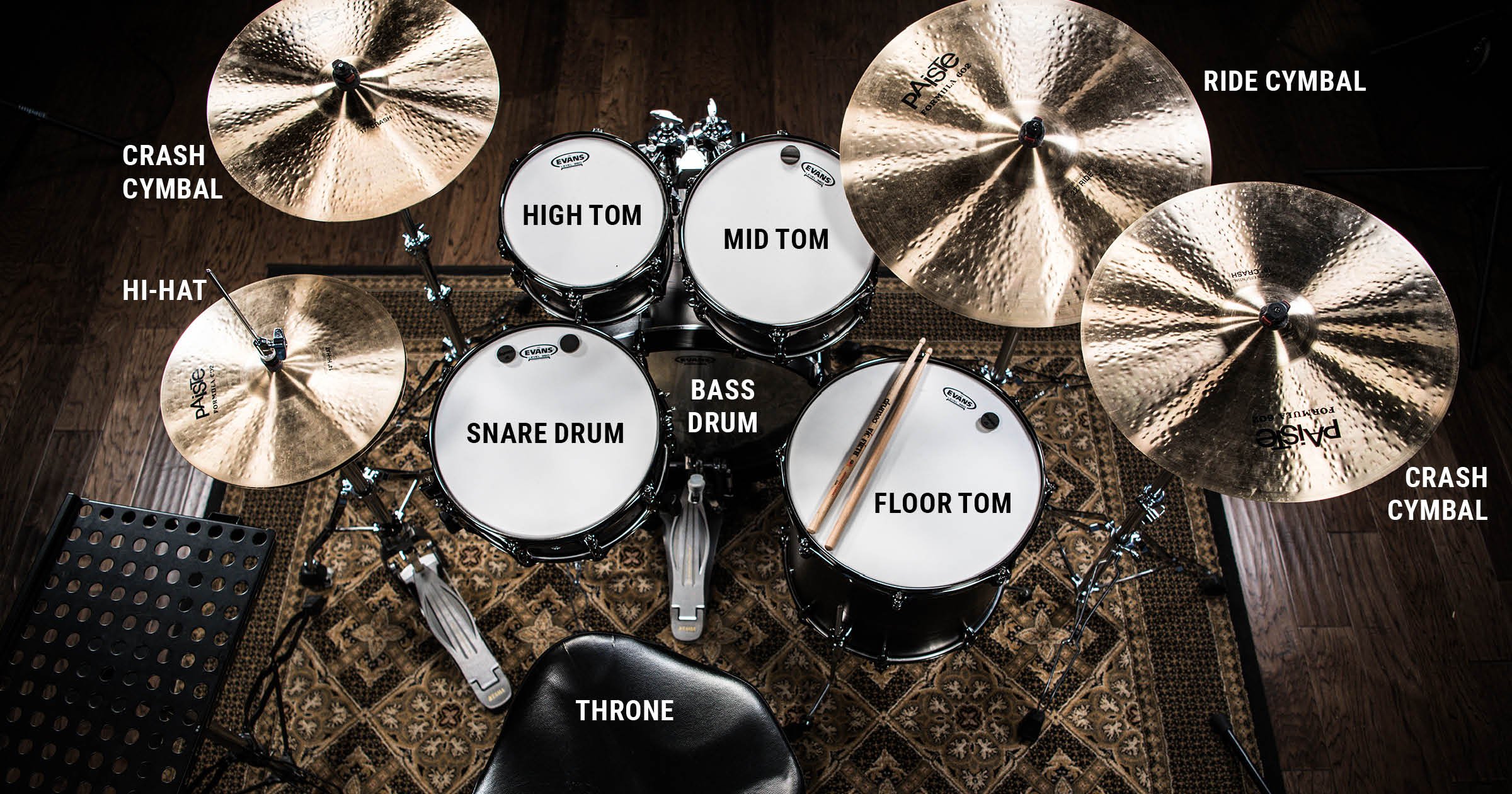
Labeled Drum Kit — showing all parts: Kick, Snare, Hi-Hat, Toms, Cymbals, Throne
Click to enlarge on SmartBoard • Reference this image while we discuss each part
Haz clic para agrandar • Usa esta imagen como referencia

🥁 Bass Drum (Kick)

Bombo (Kick)

The biggest drum, played with a foot pedal. Provides the deep, low “boom” — the heartbeat of the beat.

El tambor más grande, tocado con un pedal. Da el sonido profundo “boom” — el latido del ritmo.
Hip-Hop role: Hits on beats 1 & 3 (boom-bap) or syncopated patterns (trap)

🥁 Snare Drum

Caja (Snare)

Sits between the drummer’s knees. Has metal wires (snares) on the bottom that create a sharp “crack.”

Se coloca entre las rodillas del baterista. Tiene alambres metálicos en la parte inferior que crean un “crack” agudo.
Hip-Hop role: The CLAP — hits on beats 2 & 4 (the backbeat)

🥁 Hi-Hat

Hi-Hat

Two cymbals on a stand with a foot pedal. Open = sustained “tsss.” Closed = tight “tick.”

Dos platillos en un soporte con pedal. Abierto = sostenido “tsss.” Cerrado = corto “tick.”
Hip-Hop role: Keeps time — 8th notes or rapid 16th-note rolls in trap

The Full Kit — Toms, Cymbals & More

El Kit Completo — Toms, Platillos y Más

Video requires internet connection

▶ Open on YouTube

Drum Kit Parts Explained

Source: MTS Studios Lessons
Duration: First 4 min (auto-clipped)
TIMESTAMP GUIDE:
Must-Play 0:00–2:30 — Names & locations of each part
If-Time 2:30–4:00 — Demonstrates sound of each piece
Remaining parts:
High Tom / Mid Tom — Mounted on the kick drum, used for fills and transitions
Floor Tom — Deep tom on the floor, powerful fill sound
Crash Cymbal — Loud accent, marks section changes
Ride Cymbal — Steady pattern cymbal, lighter than crash
Throne — The drummer’s seat
Watch for: Kick + Snare + Hi-Hat = the “Big 3” that drive EVERY Hip-Hop beat
Observa: Kick + Snare + Hi-Hat = los “3 Grandes” que impulsan CADA ritmo de Hip-Hop

How Drums Drive Hip-Hop

Cómo la Batería Impulsa el Hip-Hop

💥 Kick

Bombo

BOOM

Beats 1 & 3
The heartbeat. You FEEL this in your chest. In Hip-Hop, the kick is heavy and deep.

Tiempos 1 y 3. El latido. Lo SIENTES en el pecho.

👏 Snare

Caja

CRACK

Beats 2 & 4
The backbeat. Makes you nod your head. Often replaced by a clap sound in Hip-Hop.

Tiempos 2 y 4. El backbeat. Te hace mover la cabeza.

🎵 Hi-Hat

Hi-Hat

TSS-TSS

Every 8th or 16th note
The pulse. Keeps the groove moving. Trap hi-hats roll fast (16th notes).

Cada corchea o semicorchea. El pulso. Mantiene el groove.

The Basic Hip-Hop Pattern: Kick on 1 & 3, Snare on 2 & 4, Hi-Hat on every 8th note. That’s it — 3 sounds, 1 pattern, infinite grooves. This is what you’ll program manually today.

El Patrón Básico de Hip-Hop: Kick en 1 y 3, Snare en 2 y 4, Hi-Hat en cada corchea. Eso es todo — 3 sonidos, 1 patrón, infinitos grooves. Esto es lo que programarás manualmente hoy.

From Real Kit to Digital — Soundtrap Beatmaker

Del Kit Real al Digital — Soundtrap Beatmaker
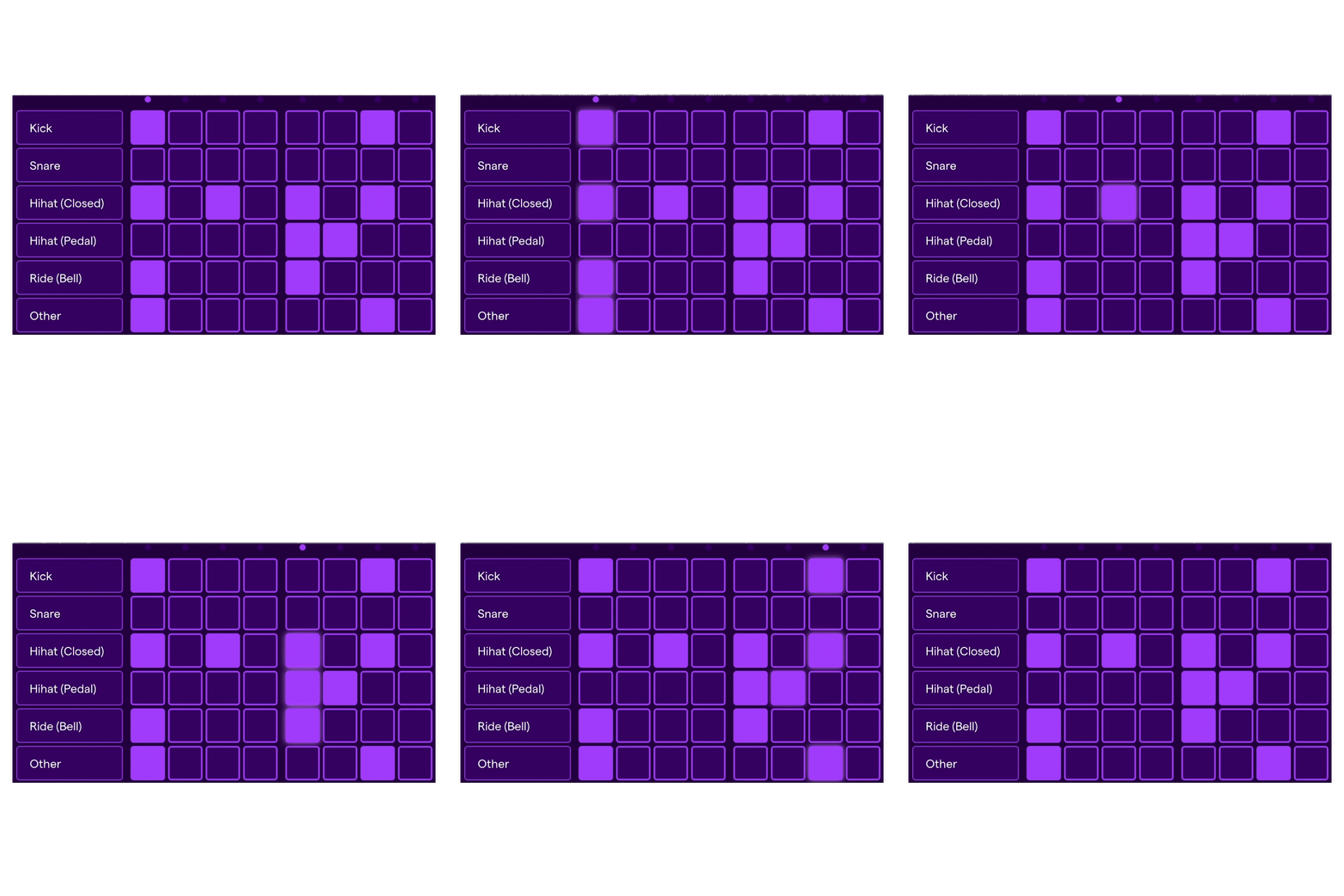
Soundtrap Patterns Beatmaker Interface — The digital drum grid where you manually program beats
Click to enlarge • Soundtrap Patterns Beatmaker — Your digital drum kit
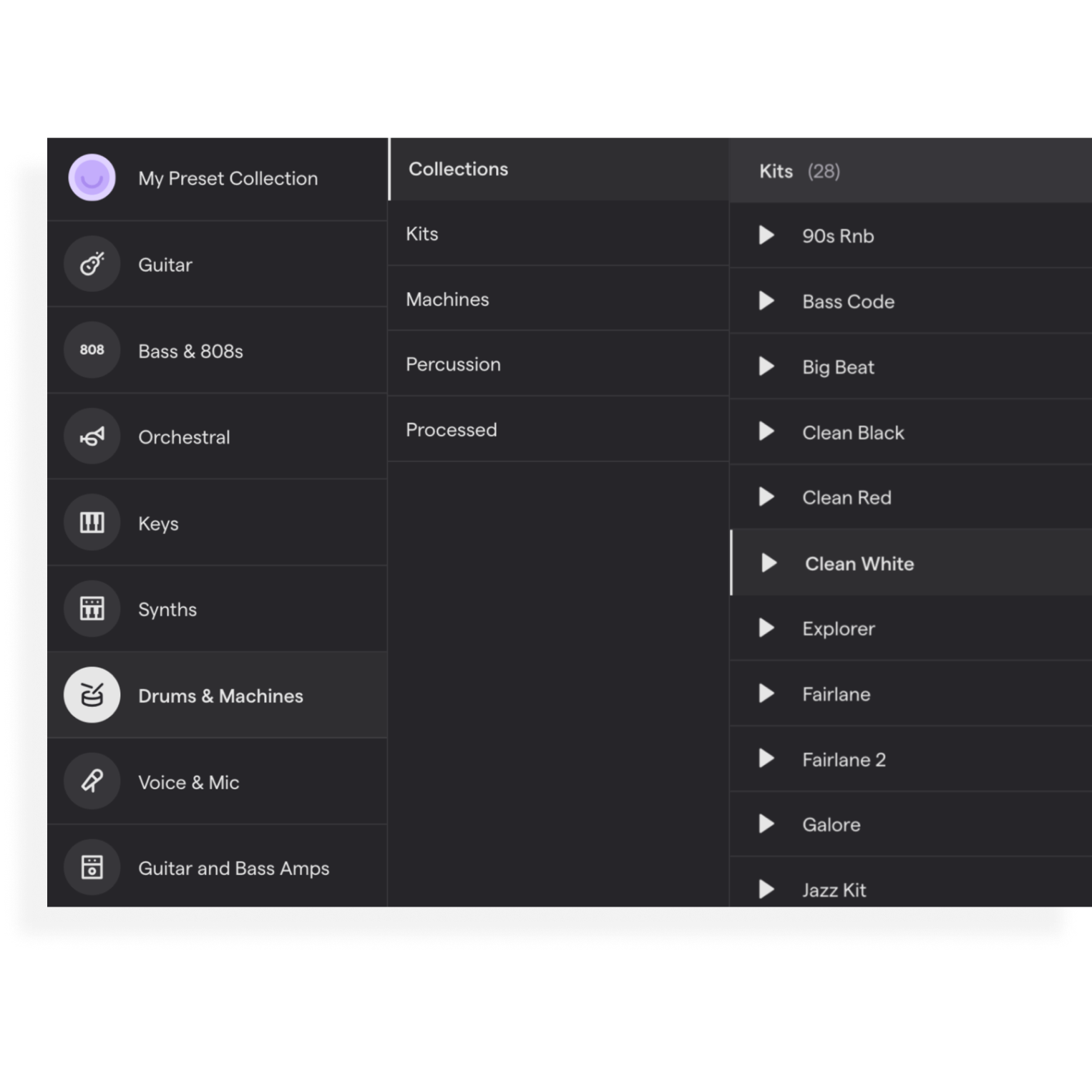
Soundtrap Drum Kit Library — Choose from 100+ free drum kits
Click to enlarge • Drum Kit Library — Choose your kit sounds

What is Patterns Beatmaker?

¿Qué es Patterns Beatmaker?

A step sequencer — a grid where each row is a drum sound and each column is a beat subdivision. Click a box to place a hit.

Un secuenciador por pasos — una cuadrícula donde cada fila es un sonido y cada columna es una subdivisión del ritmo.

Real Kit → Digital Grid

Kit Real → Cuadrícula Digital

Kick drum = Kick row
Snare drum = Snare/Clap row
Hi-Hat = Hi-Hat (closed/open) row
Same 3 sounds, now you draw when they play instead of hitting them.

Los mismos 3 sonidos, ahora dibujas cuándo suenan en vez de golpearlos.

Why Manual > Loops?

¿Por qué Manual > Bucles?

Loops are someone else’s pattern. When you program manually, the beat is 100% yours. Real producers build their own drums.

Los bucles son el patrón de otra persona. Cuando programas manualmente, el ritmo es 100% tuyo.

Programming Your Drum Pattern

Programando Tu Patrón de Batería

1 Open Beatmaker

Abre el Beatmaker

In Soundtrap: Click + Add TrackDrums & BeatsPatterns Beatmaker. Choose a Hip-Hop or Trap drum kit from the dropdown.

En Soundtrap: Clic en + Agregar PistaDrums & BeatsPatterns Beatmaker. Elige un kit de Hip-Hop o Trap.
Soundtrap Beatmaker — Step Sequencer Grid with drum sounds on the left and 16 steps across

2 Set Your BPM

Establece Tu BPM

Click the tempo number at the top of Soundtrap. Set it to 90 BPM (classic Hip-Hop). The grid has 16 steps per bar (16th notes).

Haz clic en el número de tempo en la parte superior. Establécelo en 90 BPM (Hip-Hop clásico). La cuadrícula tiene 16 pasos por compás.

3 Program the Kick

Programa el Kick

Find the Kick row. Click steps 1, 5, 9, 13 (that’s beats 1, 2, 3, 4). For Hip-Hop feel, try 1, 7, 9 (syncopated). Press play — hear the boom!

Encuentra la fila Kick. Haz clic en pasos 1, 5, 9, 13. Para un estilo Hip-Hop, prueba 1, 7, 9 (sincopado). ¡Dale play!

4 Add Snare & Hi-Hat

Agrega Snare y Hi-Hat

Snare row: Click steps 5 and 13 (beats 2 & 4 = backbeat).
Hi-Hat row: Click every other step (1,3,5,7,9,11,13,15) for 8th notes, or every step for trap 16ths.

Fila Snare: Clic en pasos 5 y 13 (tiempos 2 y 4).
Fila Hi-Hat: Clic en cada otro paso para corcheas, o cada paso para semicorcheas trap.

Pro tip: Press play AFTER each step to hear how it sounds. Build layer by layer — kick first, then snare, then hi-hat. Once your 1-bar loop sounds good, drag the right edge to extend it to 4+ bars.

Consejo pro: Presiona play DESPUÉS de cada paso. Construye capa por capa. Una vez que tu loop de 1 compás suene bien, arrastra el borde derecho para extenderlo a 4+ compases.

Build Your Own Hip-Hop Drum Pattern

Construye Tu Propio Patrón de Batería de Hip-Hop

Production Steps

1
Open Soundtrap → yesterday’s project OR New Project → Music Maker
2
Set BPM to 85–100 (Hip-Hop range)
3
Add a Drums & Beats track → select Patterns Beatmaker
4
Choose a Hip-Hop or Trap drum kit from the dropdown
5
Program your Kick pattern (at least beats 1 & 3)
6
Program your Snare/Clap on beats 2 & 4
7
Program your Hi-Hat (8th notes minimum)
8
Extend to 4+ bars — add variation in bar 3 or 4
Animated Soundtrap Beatmaker — Showing how drum patterns are built step by step
Click to enlarge — Animated demo of building a pattern

Minimum Requirements

  • 3 drum sounds minimum (Kick, Snare, Hi-Hat)
  • 4 bars minimum length
  • Manual programming only (NO drag-and-drop loops)
  • BPM 85–100 (Hip-Hop range)
  • Title: “DrumKit_[YourName]”

Level Up (Extra Credit)

  • Add a 4th sound (open hi-hat, tom, crash)
  • Create a variation in your last 2 bars
  • Add a bass loop on a second track to complement your drums
  • Try syncopation (off-beat kick hits)

Stuck? Try This

Start simple: Kick on 1 & 3, Snare on 2 & 4, Hi-Hat on every 8th note. Get that sounding good FIRST, then experiment.

Empieza simple: Kick en 1 y 3, Snare en 2 y 4, Hi-Hat en cada corchea. Haz que suene bien PRIMERO, luego experimenta.
📚 Submit on Google Classroom

Production Time

Tiempo de Producción
20:00

Headphones ON • Volume reasonable • Stay in Soundtrap
Use Patterns Beatmaker ONLY — no drag-and-drop drum loops today.
Mr. Mbagwu is circulating. Raise your hand if you need help.

Audífonos PUESTOS • Volumen razonable • Quédate en Soundtrap
Usa Patterns Beatmaker SOLAMENTE — sin bucles de batería hoy.
El Sr. Mbagwu está circulando. Levanta la mano si necesitas ayuda.
BPM
85–100
Sounds
3+ min
Length
4+ bars
Method
Manual Only
Name
DrumKit_Name
📚 Submit on Google Classroom
EXIT TICKET 4 Points • Classwork (40%)
04:00
Q1 — Drum Kit Knowledge (2 Points)

Name the 3 essential drum kit parts used in a basic Hip-Hop beat. For each one, describe what sound it makes and which beats it typically plays on.

Nombra las 3 partes esenciales del kit de batería usadas en un ritmo básico de Hip-Hop. Para cada una, describe qué sonido hace y en qué tiempos suena normalmente.

2 pts: All 3 parts named with correct sounds AND beat placement

1 pt: Partial answer (only 1-2 parts, or missing sound/beat info)

0 pts: No response or off-topic

Q2 — Production Reflection (2 Points)

How is manually programming drums in Beatmaker different from using pre-made loops? Which do you prefer and why?

¿En qué se diferencia programar batería manualmente en Beatmaker de usar bucles prefabricados? ¿Cuál prefieres y por qué?

2 pts: Clear comparison with specific details AND reasoned preference

1 pt: Vague comparison (e.g., “one is harder” without specifics)

0 pts: No response or off-topic

Multiple means of expression: Written • Verbal share with Mr. Mbagwu • Audio recording
📚 Submit on Google Classroom

Coming Up Next

Próximamente
Tomorrow: Continue building your beat — add bass, melody, and effects to your drum pattern. Your drums are the foundation — everything builds on top.
Mañana: Continúa construyendo tu ritmo — agrega bajo, melodía y efectos a tu patrón de batería. Tus tambores son la base — todo se construye encima.
Your drum pattern is the skeleton. Tomorrow you add the muscle and skin.
“For we are God’s handiwork, created in Christ Jesus to do good works, which God prepared in advance for us to do.”
— Ephesians 2:10
← L18: Hip-Hop Genre Project
×
navigate • F fullscreen • + zoom • Click images to enlarge